Friday, August 26, 2011

Qadhafi's mafia state


With all the focus on the end of the Qadhafi dictatorship in Libya, it is timely to also ask how Qadhafi managed to stay in power for 42 years, largely unchallenged. The Muftah blog has some interesting commentary on the 'mafia state' created by the Qadhafi family in which civic values were completely absent. Here is an extract:


Symptomatic of how it was run [the state] is an incident in 2009, in which
two of Qadhafi's sons fought each other with military tanks until one of
them forced the other to sell him his shares in a new Coca Cola plant in the
country.


Tuesday, August 16, 2011

Reflections on the Arab Spring


Rami Khouri has a light and easy summary here on events in the Middle East since the start of the Arab uprisings (how long can people refer to it as the Arab Spring? after all, it's likely to continue in one form or another for years, if not decades.).

Tuesday, August 2, 2011

The end of Tahrir?

Yesterday, the Supreme Council of the Armed Forces (#SCAF) finally lost its patience with the ongoing sit-in protest in Tahrir Square and sent in the troops to clear the remnants of the protest movement. SCAF's calculation was based on on the fact that the average Egyptian is now weary of the demonstrations and is craving a return to normal life, and the centre of the Egyptian capital reopened for business. The decision by the liberals and leftist groups on July 8th to 're-occupy' Tahrir until SCAF meets its demands appears to have backfired completely, alienating the majority of the population and forcing a backlash from the diverse Islamist trends. A battle is now underway for the ownership of the revolution.

Marc Lynch has some analysis here.

Thursday, July 21, 2011

Palestinian reconciliation ...?


Was the recent accord signed between Fatah and Hamas provoked by a genuine change of heart or merely another consequence of the Arab Spring? ICG delves into the key issues in a new report here.

Monday, July 11, 2011

Jordan: barriers to reform

Suleiman al-Khalidi of Reuters has a good round-up here of the pressures facing Jordan in the current Arab Spring (read: static summer) and the obstructionist policies of the country's old guard to ensure their interests, and not those of the state, remain protected at any cost.

Tuesday, July 5, 2011

Egypt and Palestine

Helena Cobban has a good piece here on what has, or has not changed in Gaza as a result of the Egyptian uprising.

Wednesday, June 15, 2011

Lebanon's new government


After 5 months of deadlock, Lebanon has a new government dominated by Hezbollah and its allies. Paul Salem of Carnegie Middle East Centre has some good analysis here.

Obama sticks by Assad, for now

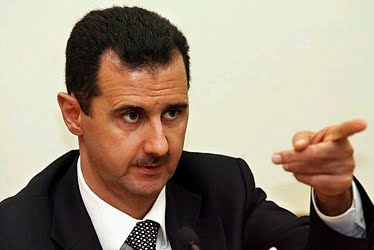
With the situation in Syria getting worse by the day and Bashar al-Assad sanctioning an all out military assault on his own people, one can't help but wonder when the US will begin to take a much stronger line with the Assad regime. As Tony Badran points out on the Foreign Policy blog, "Assad's brutality has already cost him critical relations with three countries that have been instrumental in his efforts to rehabilitate himself in the world: France, Qatar, and Turkey". Even Israel's Defence Minister Ehud Barak, has stated on record that Assad "has lost his legitimacy" - though I still suspect the Israelis would still prefer the devil they know to protect their northern border.


But so far Washington's position has remained unchanged, i.e., limited sanctions and calls for reform. For the Obama administration, already struggling with multiple challenges to its Middle East security structure, the consequences of the Assad regime falling and the regional turmoil that would inevitable follow are just too big to contemplate. However, with the level of regime brutality escalating by the day, this position is becoming increasingly untenable. The line from Washington has been that it has no leverage. This is not entirely true. For a start, the US could withdraw its Ambassador in Damascus and declare the Syrian regime illegitimate. This would have a significant impact in sending a strong message to the protesters, the international community and the regime. Strong US leadership would result in more galvanised international action.


Strong US leadership in confronting the Assad regime has worked in the past. International pressure led by the US in 2005 resulted in UN Security Council Resolution 1559, which forced the Syrians to pull out of Lebanon . The circumstances, of course, were different and the regime was facing external rather than internal challenges to its rule. But it did demonstrate one thing: that the threat of force is the only thing that the Assad clan understands (Syria was worried that it would become the next target after Iraq for the pro-Israel neocons in Washington). This is not a call for military intervention, but rather a clearer and consistent US strategy in the region, which has been badly lacking since the start of the Arab uprisings.


Wednesday, June 8, 2011

A picture paints a thousand words


Who's been a naughty boy then? Crown Prince of Bahrain, Salman bin Hamad Al Khalifa, is looking very nervous before a none too pleased Hilary Clinton during a 'brief' meeting on June 7th. Relations between the two allies have become somewhat fraught in recent weeks as the al-Khalifi regime has been busy proving what a brutal US client it really is, even going as far as to running state security court trials for doctors accused of 'treating injured protesters'. Read Simon Henderson's recent analysis here.

Tuesday, May 31, 2011

Nasrallah backs Assad's repression


Hassan Nasrallah broke his long, long silence on Syria on May 25 and with it probably his reputation throughout the entire Middle East by backing Syrian President Bashar al-Assad's brutal repression of his people. In a 2008 Zogby poll Nasrallah was voted the most popular leader in the Arab world, a significant achievement for a Shia leader in a Sunni-dominated region. After his recent comments in support of Assad, however, i doubt he will retain this position for much longer.


I think it's fair to say that Ranna Kabbani's post on the al-Bab blog just about sums up the feelings of betrayal felt by the Syrian people as they witness one of their former heroes and self-styled champion of the oppressed side against them in their time of need. Describing Nasrallah's speech, Kabbani states:


"As ever, it took on the mythic pageantry of a Passion Play. Nasrallah began by urging his many listeners to suffer the few hours of their wait in the burning sun to hear him, as a way of sharing the burning experience of all those who suffered and sacrificed so greatly to bring this occasion about.


"He then broke his long, long silence on the popular intifada in Syria, only to side totally and categorically with the killers in the Syrian regime. As a Syrian watching this, who knows what great popularity Nasrallah once enjoyed in her country, where photos of him were on display everywhere – making his the only face ever allowed to be added to the Assad iconography of Father, Son and Holy Ghost – or Hafiz, Bashar and the departed Basil – so depravedly and cynically modelled on Christian religious belief. I felt viscerally that something had shifted irrevocably as the chairman uttered his unfortunate words. No wonder that his image was torched almost at once after this speech in Deraa and Muaddamiyya and Homs and Hama and Bou Kamal and other centres of our intifada."


Wednesday, May 18, 2011

Bahrain: targetting the medics


A Physicians for Human Rights investigation last month into the brutal and systematic abuse of pro-democracy protesters has resulted in some disturbing, yet perhaps predictable, findings.

The reports authors - both medical doctors - conducted interviews with 47 medical workers, patients and other eyewitnesses and corroborated testimonies by conducting physical examinations of beaten and tortured protesters, as well as deaths in custody. The report also produced strong evidence that the al-Khalifah regime had systematically targetted medical staff, including abductions of doctors, some of whom were taken from their homes in the middle of the night by security forces. The report concluded that the Bahraini authorities:


  • Attacked ambulances; removed ambulance medics, and forced them to give their uniforms to police who then posed as medics to get closer to protesters;

  • Prevented ambulances from reaching people who needed medical care;


  • Blockaded health facilities and obstructed delivery of care;


  • Militarized the country's main tertiary care hospital, preventing medical staff and patients from entering or leaving;


  • Destroyed medical records;


  • Abducted medical professionals, detained and held them incommunicado;


  • Hunted down patients wounded in protests by searching medical centers and setting up police check points;


  • Humiliated, beat, and tortured patients while in medical centers;


  • Forcibly discharged patients in need of urgent medical care.

Of course, Bahrain's security forces are the backbone of the al-Khalifah regime with large numbers of their personnel recruited from other countries, including Jordan, Pakistan and Yemen (a main reason why the GCC's club of Kings is making overtures to Jordan and its well trained security forces). Bahrain's Shia majority, meanwhile, is mostly excluded from positions in the security forces.

Monday, May 16, 2011

Assad plays Israel card


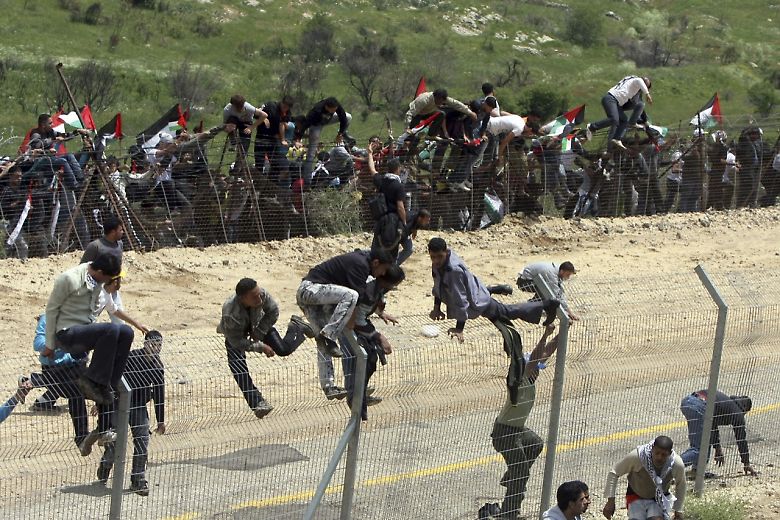
With mounting pressure domestically, the Syrian regime cynically played its Israel card yesterday by allowing Palestinians commemorating al-Nakba day (meaning catastrophe) - the day Israel was created in 1948 - to storm the border fences and become targets for Israeli bullets. Since 1974, the Syrians have guarded the border closely, fearing Israeli reprisals for any possible Palestinian guerrilla activity in the region.


Despite its anti-Israel rhetoric and championing of the Palestinian cause, a quiet border on the Syrian front (of course this does not apply to Lebanon which has paid dearly for Syria's attempts to regain the Golan Heights through supporting Hezbollah) has been a top priority of the Assad dynasty over the past 38 years. In fact, you could argue that Syria's ability to maintain a peaceful border with Israel has been too successful, leading the Israelis to conclude that there is no need to enter peace talks to resolve the issue of the occupied territories, under Israeli control since 1967. Yesterday's border incursions, therefore, where a typically crude attempt by the Assad regime to remind Israel, the US, Lebanon and Jordan of the sought of chaos that could unfold if the ruling Allawite clan in Damascus where to fall and to buy time for its brutal repression. But will it work?


The problem with this strategy for Assad is that it also highlights to the US and Israel how far the Allawite clan in Damascus is willing to go to retain power. The old saying "there is nothing more dangerous than a wounded animal" clearly comes to mind and no doubt will provoke some debate in Washington and Tel-Aviv. As such, the tactic may well backfire and lead to the conclusion that the Syrian leader is becoming more of a liability than an asset. Furthermore, with the Syrian regime, despite continuing protests, not under any immediate short term threat of being toppled, it will also raise questions regarding how far Assad would actually go if the Syrian regime where to face a more serious challenge in the future.


Monday, May 9, 2011

Update: Palestine unity deal


Following on from the previous post, Middle East Chanel has an interesting interview with Mustafa Barghouti on the new Palestinian unity deal. Read it here.

Thursday, May 5, 2011

Hamas-PA unity accord: a few thoughts

The ripple first tangible ripple effect of the so-called Arab spring on the Palestinian-Israeli conflict revealed itself on Wednesday with the signing of a Hamas-Palestinian Authority unity accord.


After four years of hostility following Hamas' 2006 election victory, the two key Palestinian factions Fatah and Hamas have agreed to set up a unified caretaker government which will pave the way for new elections. So after years of animosity and repeated failed attempts to reach a compromise, why now?


Firstly, Egypt's secret role in brokering the agreement appears to be the first clear sign that the country's de facto new ruler and long-time defence chief, Mohammad Tantawi, is far less rigid towards the Islamist movement than his former boss Husni Mubarak. This new position is being driven by pragmatism rather than any love for the Brotherhood and reflects the changed political landscape in Egypt after the fall of Mubarak, which has left the remnant of Mubarak's NDP party and the Islamists in the driving seat - for now.


If and when civilian rule is restored, the military, which controls a big slice of the economy, will want to preserve its privileges and may seek a background role as 'national guardian'. It remains unclear what role the Islamist will play in the future political system. This will depend on how well the Brotherhood performs in the September election. If the group performs well, it will feel emboldened and no doubt seek greater power. In the meantime, all sides will be hedging their bets and the country's military rulers will be looking to build support among the Islamists. The signing of the recent Hamas-PA accord will therefore boost the military's political capital in an uncertain landscape.


Secondly, although the new nuanced regional approach of Egypt towards Hamas and Iran, compared to Mubarak's staunch alliance with the US and Israel, is certainly a factor in bridging the divide between the PA and Hamas, there is also a strong dose of realism on the part of both Palestinian factions. Both must be aware that the so-called Arab Spring may be heading their way and that a failure to move forward may result in a backlash from a Palestinian public fed up with poor governance, bickering and infighting.


For Hamas, the threats on the horizon appear more obvious. After four years in charge of Gaza they have failed to deliver any tangible economic benefits and have ruled over a population largely cut off from the outside world, in main as a result of Israel's cruel blockade. Nevertheless, Gaza's population will not indefinitely put up with the status-quo. Furthermore, the largely secular-driven Arab uprisings - though Islamist parties may emerge as future benefactors -have largely undermined Hamas' message and portrayed the group as belonging to the past rather than the future. This image will only be reinforced by Hamas' alliance with Iran and Syria. Both states have resorted to severe repression in order to quell their own opposition movements and images of largely Sunni Muslim Syrian protesters being shot in the streets by an Allawi-dominated military will not resonate well with the overwhelmingly Sunni Palestinian popualtion.


For the PA, the accord with Hamas appears to be aimed at shoring up its flagging popularity, pleasing the new regime in Egypt, and an attempt to offset challenges to its authority stemming from the Arab spring. More crucially, however, it represents a conviction that any negotiations with Israel so long as Netanyahu is in power are a non-starter. It also signifies the PA's lack of faith in the Obama administration's ability to have any influence over the current Israeli government and the death of the so-called peace process itself.


All eyes will now be on the reaction of the US and the Quartet. Will it once again demand that the new government must recognize Israel and honour the agreements already signed with it? If the quartet sticks to its previous position that Hamas must recognise Israel's right to exist and reject armed struggle then all sides will be back to square one. Mind you, they never got to stage two anyway.

Tuesday, April 26, 2011

Syria: a state of fear

It's no surprise that many of Syria's minorities are feeling fearful right now as unrest spreads throughout the country. The current minority Allawite regime, for all its ills, has long been viewed as the protector of minority religious rights and the vanguard of a secular (ish) society.

To gauge the current feeling in the country see Joshua Landis' recent post and the myriad of different voices expressing their fears on what may follow Assad, if the regime falls, and that's a big IF.

For more analysis on Syria, see here and here.

Saturday, April 16, 2011

Bahrain update

After a month of repressive crackdowns on pro-reform protesters, including the influx of Saudi troops to shore up the al-Khalifah regime, the government in Bahrain appeared to backtrack for the first time on Friday after coming under criticism from Washington. The criticism centred on the government's decision on Thursday to ban the country's main opposition groups, including al-Wefaq, which withdrew its 18 MPs from the 40-seat parliament in February in protest at the government crackdowns.


It appears that the al-Khalifah regime has taken Washington's silence since the start of the protests as a green light for a total crackdown on the opposition. This 'overstepping of the boundaries' has placed the Obama administration - already facing heavy criticism for its inconsistent stance vis-à-vis the Arab uprisings - in a difficult position. The White House is also aware - unlike the hardliners in Bahrain - that banning the main Shia party will only fuel the unrest and further the chances of a more violent insurrection similar to what took place in the 1990s.


Joost Hiltermann of International Crisis Group has a podcast here on the recent unrest.


Wednesday, April 13, 2011

Egypt: business as usual

In the first case of its kind since the Egyptian uprising against the Mubarak regime, a military court has sentenced an Egyptian blogger to a three year prison term for publishing "false information and "insulting the armed forces". As Joe Stork of Human Rights Watch points out, the "The ruling [against Maikel Nabil]comes at a time when the Egyptian military is drawing very restrictive red lines around permissible speech". Joe Stork goes on to note:

"Since the Supreme Council of the Armed Forces (SCAF) assumed power on February 11, the military has arrested at least 200 protesters and tried scores of them before military courts. Over 150 protesters arrested on March 9 after the military forcibly cleared Tahrir Square of protesters were sentenced to prison terms by military tribunals in Cairo's high-security Tora prison and are still being held."

Wednesday, April 6, 2011

Syria: Riding out the storm


The regime of Syrian president Bashar al-Assad seems to have weathered the storm, for now. The regime will take comfort that the army and security services (firmly in the hands of Assad's Allawi minority) stayed loyal and the protest movement that briefly flourished in the provinces failed to take route in the country's three major cities of Damascus, Aleppo and Hama.


The conclusion Assad may draw from this is that Syrians - for the time being - prefer stability. The lessons drawn from political disorder in neighbouring Lebanon, Iraq and now Libya have not been lost on a population that is keenly aware of the fragile ethnic and sectarian make-up of their state. The old saying "order under an unjust leader is better than chaos under a just leader" appears to ring true for many Syrians. But while Assad may take comfort from this - and also from tactical support from the US - he should be wary of complacency.


Syria's youth, like the youth all over the Arab world, have spoken. They may not want to plunge the country into civil conflict but they do demand that the regime responds to their legitimate demands for greater political freedoms, accountable government and better economic prospects. They are no longer apathetic and have sent a clear signal to the regime that things need to change to meet their growing aspirations. It seems clear that the Syrian population has changed even if the regime has not. Communications and social media have dragged the country out of its isolation. The open question now is: can the regime respond to these changes?


Joshua Landis has some interesting observations on the recent unrest here and here.


Wednesday, March 30, 2011

America's Syria conundrum

Not much time for blogging at the moment so I'm going to hand over to long time Syria watcher Patrick Seal who has offered some excellent analysis in Foreign Policy in regards of the dilemma posed by events in Syria to the US and Israel. Personally, I think both states would prefer the status quo - better the devil you know - regardless of the fact that Syria lies at the heart of the so-called Iran axis.

Monday, March 28, 2011

Jordan's Tahrir Square moment


I'm going to leave it Naseem Tarawneh here to provide the full eye-witness account of what took place in Jordan last weekend as hundreds of pro-reform demonstrators came under an orchestrated and sustained attack by regime loyalists during a peaceful sit-in close to the Interior Ministry. Here's an excerpt:


'I am not sure how things spiraled out of control, but from my point of view, having retreated to the neutral area outside the governorate office, I saw two things that contributed to what was about to happen. The first were a series of cars that seemed to be carrying anti-reformists. During the early morning period, these cars were permitted to enter the circle and circle around honking horns and unloading anti-reformists. I use he word “permitted” because all access to the duwar had been cut off by police and the only way these cars (and buses) could get in was either by ramming through the police barricade or being allowed in by the police. This is a very binary conclusion because I really see no other explanation. During that dreadful Friday afternoon, these actions allowed the anti-reformists to grow in numbers. Little did most of the people there know, but there were dozens of cars and buses filled with these people approaching the duwar from the Sports City circle a few kilometers aware.'

All I will add to Naseem's piece is that it says a lot about the insecurity of the Hashemite monarchy that it feels compelled to resort to the crude and inevitably counterproductive strategy of promoting social and ethnic divisions to retain power.