Saturday, April 16, 2011

Bahrain update

After a month of repressive crackdowns on pro-reform protesters, including the influx of Saudi troops to shore up the al-Khalifah regime, the government in Bahrain appeared to backtrack for the first time on Friday after coming under criticism from Washington. The criticism centred on the government's decision on Thursday to ban the country's main opposition groups, including al-Wefaq, which withdrew its 18 MPs from the 40-seat parliament in February in protest at the government crackdowns.


It appears that the al-Khalifah regime has taken Washington's silence since the start of the protests as a green light for a total crackdown on the opposition. This 'overstepping of the boundaries' has placed the Obama administration - already facing heavy criticism for its inconsistent stance vis-à-vis the Arab uprisings - in a difficult position. The White House is also aware - unlike the hardliners in Bahrain - that banning the main Shia party will only fuel the unrest and further the chances of a more violent insurrection similar to what took place in the 1990s.


Joost Hiltermann of International Crisis Group has a podcast here on the recent unrest.


Wednesday, April 13, 2011

Egypt: business as usual

In the first case of its kind since the Egyptian uprising against the Mubarak regime, a military court has sentenced an Egyptian blogger to a three year prison term for publishing "false information and "insulting the armed forces". As Joe Stork of Human Rights Watch points out, the "The ruling [against Maikel Nabil]comes at a time when the Egyptian military is drawing very restrictive red lines around permissible speech". Joe Stork goes on to note:

"Since the Supreme Council of the Armed Forces (SCAF) assumed power on February 11, the military has arrested at least 200 protesters and tried scores of them before military courts. Over 150 protesters arrested on March 9 after the military forcibly cleared Tahrir Square of protesters were sentenced to prison terms by military tribunals in Cairo's high-security Tora prison and are still being held."

Wednesday, April 6, 2011

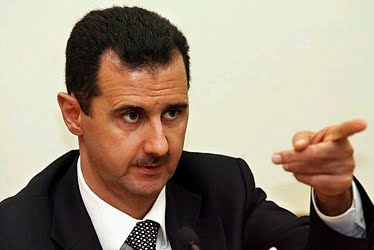
Syria: Riding out the storm


The regime of Syrian president Bashar al-Assad seems to have weathered the storm, for now. The regime will take comfort that the army and security services (firmly in the hands of Assad's Allawi minority) stayed loyal and the protest movement that briefly flourished in the provinces failed to take route in the country's three major cities of Damascus, Aleppo and Hama.


The conclusion Assad may draw from this is that Syrians - for the time being - prefer stability. The lessons drawn from political disorder in neighbouring Lebanon, Iraq and now Libya have not been lost on a population that is keenly aware of the fragile ethnic and sectarian make-up of their state. The old saying "order under an unjust leader is better than chaos under a just leader" appears to ring true for many Syrians. But while Assad may take comfort from this - and also from tactical support from the US - he should be wary of complacency.


Syria's youth, like the youth all over the Arab world, have spoken. They may not want to plunge the country into civil conflict but they do demand that the regime responds to their legitimate demands for greater political freedoms, accountable government and better economic prospects. They are no longer apathetic and have sent a clear signal to the regime that things need to change to meet their growing aspirations. It seems clear that the Syrian population has changed even if the regime has not. Communications and social media have dragged the country out of its isolation. The open question now is: can the regime respond to these changes?


Joshua Landis has some interesting observations on the recent unrest here and here.


Wednesday, March 30, 2011

America's Syria conundrum

Not much time for blogging at the moment so I'm going to hand over to long time Syria watcher Patrick Seal who has offered some excellent analysis in Foreign Policy in regards of the dilemma posed by events in Syria to the US and Israel. Personally, I think both states would prefer the status quo - better the devil you know - regardless of the fact that Syria lies at the heart of the so-called Iran axis.

Monday, March 28, 2011

Jordan's Tahrir Square moment


I'm going to leave it Naseem Tarawneh here to provide the full eye-witness account of what took place in Jordan last weekend as hundreds of pro-reform demonstrators came under an orchestrated and sustained attack by regime loyalists during a peaceful sit-in close to the Interior Ministry. Here's an excerpt:


'I am not sure how things spiraled out of control, but from my point of view, having retreated to the neutral area outside the governorate office, I saw two things that contributed to what was about to happen. The first were a series of cars that seemed to be carrying anti-reformists. During the early morning period, these cars were permitted to enter the circle and circle around honking horns and unloading anti-reformists. I use he word “permitted” because all access to the duwar had been cut off by police and the only way these cars (and buses) could get in was either by ramming through the police barricade or being allowed in by the police. This is a very binary conclusion because I really see no other explanation. During that dreadful Friday afternoon, these actions allowed the anti-reformists to grow in numbers. Little did most of the people there know, but there were dozens of cars and buses filled with these people approaching the duwar from the Sports City circle a few kilometers aware.'

All I will add to Naseem's piece is that it says a lot about the insecurity of the Hashemite monarchy that it feels compelled to resort to the crude and inevitably counterproductive strategy of promoting social and ethnic divisions to retain power.


Thursday, March 24, 2011

Egypt update

With all the international attention on Libya right now, the first Arab uprisings in Tunisia and Egypt have largely faded into the background. The long slog towards democratic change and the nitty gritty of constitutional amendments was never going to be front page news - and i guess the old power networks in both these states are very relieved about that.

Following the referendum, the Egyptian novelist Alaa al-Aswany neatly sums up the state of play in Egypt right now and the danger signs ahead. Read it here.

Tuesday, March 22, 2011

So what's the Libya endgame?


(AP Photo)

To many, UNSCR 1973 took a long time in coming. The immediate impetus, despite the various conspiracy theories now emerging about a Western plot to grab Libya's energy resources, was to safeguard the citizens of Benghazi from Qaddaffi's advancing army. The Libyan leader, buoyed by military successes in forcing the rebels out of Ajdabiyah and elsewhere, had just hours before the resolution was passed threatened to cleanse Benghazi and show "no mercy". For a leader with a track record of brutality, including the use of foreign mercenaries against his own people, these threats needed to be taken seriously and the international community was right to intervene.

But now the debate has quickly moved on. Apart from the inevitable criticism from the left, who have failed to put forward any credible alternatives to the UN mandated action, already we are beginning to see cracks emerge in the international community and the coalition itself. Yesterday, Russian PM Vladimir Putin compared the military action in Libya to the invasion of Iraq and likened it to the "Crusades", knowing full well the strong impact of this word in the Arab world. China has called for the air strikes to stop. Both Russia and China were among five states that abstained on UNSCR 1973 but nevertheless allowed it to pass. The Arab League, crucial to convincing the Obama administration to throw its support behind the UN resolution, has also wobbled, with its secretary general Amr Moussa voicing criticism before suddenly backtracking, no doubt under political pressure. And now we are hearing that NATO itself is unwilling to take over the operation, with Turkey calling for immediate talks.

There are, of course, good reasons why some of these political actors are wary of supporting the military intervention, even if they either initially signed up or acquiesced to the will of the international community. China, Russia and Turkey have their own restive minorities seeking greater political independence and freedom and however unlikely, would not want a precedence set for liberal interventionism. Likewise, the under pressure dictators of the Arab League are paradoxically attempting to demonstrate their support for their 'Libyan brothers' to appease their own populations in the grip of revolutionary fervour, whilst at the same time becoming increasingly wary of the aims of the coalition in pursuing actual regime change. However, what unites them all is the deep misgivings and an unwillingness to fully commit politically to a project whose aims are obscure and whose success is far from sure. What would have been an easier operation weeks ago has now become considerably more difficult.

As such, the longer the military campaign continues and the more the coalition inevitably gets drags into this conflict the more these cracks will deepen. It is clear that the goal of the US, Britain and France in particular is regime change. Europe does not want to be left with a pariah state on its southern borders ruled by a dictator with a track record in supporting terrorism. The US likewise does not want the headache of dealing with a rogue state that will inevitably seek to revive its nuclear and chemical weapons programmes, backed by the country's energy reserves (and China and Russia securing lucrative contracts). Also, if Qaddafi succeeds in suppressing the rebellion there is the danger that other Arab states will follow suit, resulting in more regional instability and the prospect of multiple armed insurrections. On the other hand, if the US is seen to overtly side with the rebels militarily then other opposition movements in the Arab world and possibly the Gulf, will feel more emboldened to challenge their respective regimes. This dilemma - along with the uncertainly of what comes after Qaddafi - goes a long way to explaining the current hedging on the part of the coalition.

Since the adoption of UNSCR 1973 the coalition has set about degrading Qaddafi's military capabilities largely under the pretext of humanitarian intervention in the hope that this will be enough to fracture the military while at the same time tip the balance of power in favour of the rebels. It may yet work. So far, however, the signs are less than positive. This is not Afghanistan in 2001 where the US used the Northern Alliance to topple the Taliban while providing overwhelming air power. At present, the rebels appear to lack the military organisation and means to take the fight to Qaddafi and a stalemate looks like a distinct possibility. The outcome could well be the partition of Libya and a prolonged conflict, as it seems unlikely that neither side would accept this scenario. Furthermore, would the coalition accept such an outcome? If not, are coalition warplanes going to bomb Qaddafi's forces to clear the route to Tripoli? Too many questions and so few answers. And this is before we even consider what comes next if Qaddafi does fall. Foreign Policy has some analysis here.